
For Your Dog’s Health
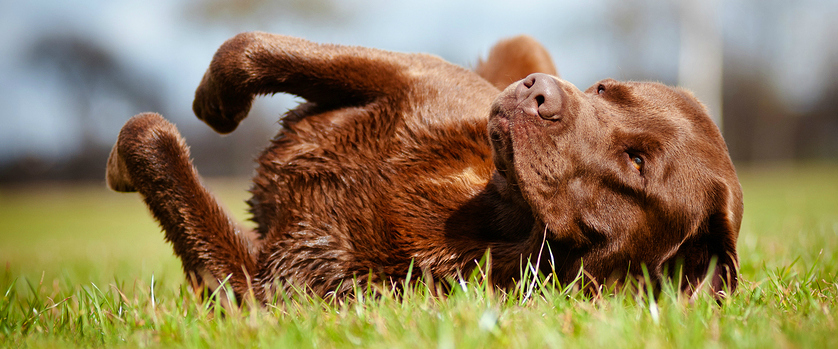
We know that your dog's health is important to you. The information here will be helpful whether your dog is healthy or affected by a disease. Please remember that the information contained here cannot substitute for the advice of your veterinarian.
Dog Health Articles: the articles below contain more detailed information on canine health issues. They can be filtered by research area.
Collapsing Trachea September 18, 2009
A persistent cough that at times turned into an obnoxious hacking, honking clatter landed a Yorkshire Terrier named “Charlie” at the University of Pennsylvania Ryan Veterinary Hospital. The 6-year-old, 7-pound Yorkie had a collapsing trachea, a potentially life-threatening condition in which the windpipe collapses, cutting off airflow to and from the lungs.
Canine Lymphoma August 30, 2009
An overview of canine lymphoma, the available treatments and research on the disease.
Epilepsy Treatments March 3, 2009
The AKC Canine Health Foundation has approved nearly $1.3 million in epilepsy research. While epilepsy is a complicated disease, we are hopeful that we will soon have information available to help with treating and preventing disease.
Spread of a Recently Evolved Strain of Parvovirus in US Dogs May 5, 2008
Canine parvovirus type 2 (CPV2) was first detected in 1978 as the virus which causes a severe diarrheal disease in dogs, now particularly puppies. The first detection of the most recent variant, CPV2c, was found in the Americas in 2007.
Canine Hemangiosarcoma - The Road from Despair to Hope August 16, 2007
Experts in canine cancer research describe the current state of knowledge for canine hemangiosarcoma, including what it is, why it may happen, and how it can be managed. In addition, they present recent findings from their programs that promise to help us improve our ability to diagnose, treat, and prevent this disease.
Researchers at the University of Georgia Search for Causes of Meningoencephalitis June 21, 2007
Meningoencephalitis, a general term for inflammation of the brain and its outer covering (meninges), is a naturally occurring disease that is relatively common in toy breed dogs. At the University of Georgia, College of Veterinary Medicine, a neurology research group lead by Dr. Scott Schatzberg is working to identify potential infectious causes for canine meningoencephalitis.
Gene for Merle Color Pattern Discovered March 29, 2006
Researchers at Texas A&M University have recently published an article describing their identification of the genetic mutation that causes merle coat color patterning in several breeds. The merle coat color is also associated with several health concerns including deafness.
Recognition of Canine Dental and Oral Pathology December 16, 2005
The recognition and treatment of canine dental and oral pathology is an important component in successful management of canine health. Many dental and oral lesions occur frequently in dogs but may have a variety of presentations and treatment options.
Dog Genome Sequence and Analysis Published in Nature December 12, 2005
An international research team led by scientists at the Broad Institute of MIT and Harvard announced the completion of a high-quality genome sequence of the domestic dog. Funded in part by grants from the AKC Canine Health Foundation, the genome sequence provides a catalog of 2.5 million specific genetic differences across several dog breeds.
The Genetics of Canine Aging and Longevity May 17, 2005
It is a well-known phenomenon among owners and breeders that purebred dogs exhibit a decrease in life expectancy as the breed size increases. Researchers at Texas A&M University College of Veterinary Medicine believe that this unexpected trend seen in the dog is due in part to underlying genetic factors.
Help Future Generations of Dogs
Participate in canine health research by providing samples or by enrolling in a clinical trial. Samples are needed from healthy dogs and dogs affected by specific diseases.
Help Future Generations of Dogs
Participate in canine health research by providing samples or by enrolling in a clinical trial. Samples are needed from healthy dogs and dogs affected by specific diseases.
